
Under Commission Implementing Regulation (EU) 2026/1865, the additive is classified as a sensory additive within the functional group of flavouring compounds. The regulation was adopted on July 29, 2026 and applies from August 19, 2026.
Feed additives placed on the EU market are subject to regulatory assessment covering areas such as safety, intended use and compliance with technical requirements.
The authorization of thyme essential oil follows the EU framework for evaluating substances used in animal nutrition. It also demonstrates how natural-origin ingredients remain subject to the same structured regulatory process as other feed additives before they can be marketed for approved uses.
The EU regulation also provides transitional periods for products manufactured and labelled under previous conditions, allowing the industry time to adapt to the updated authorization requirements.
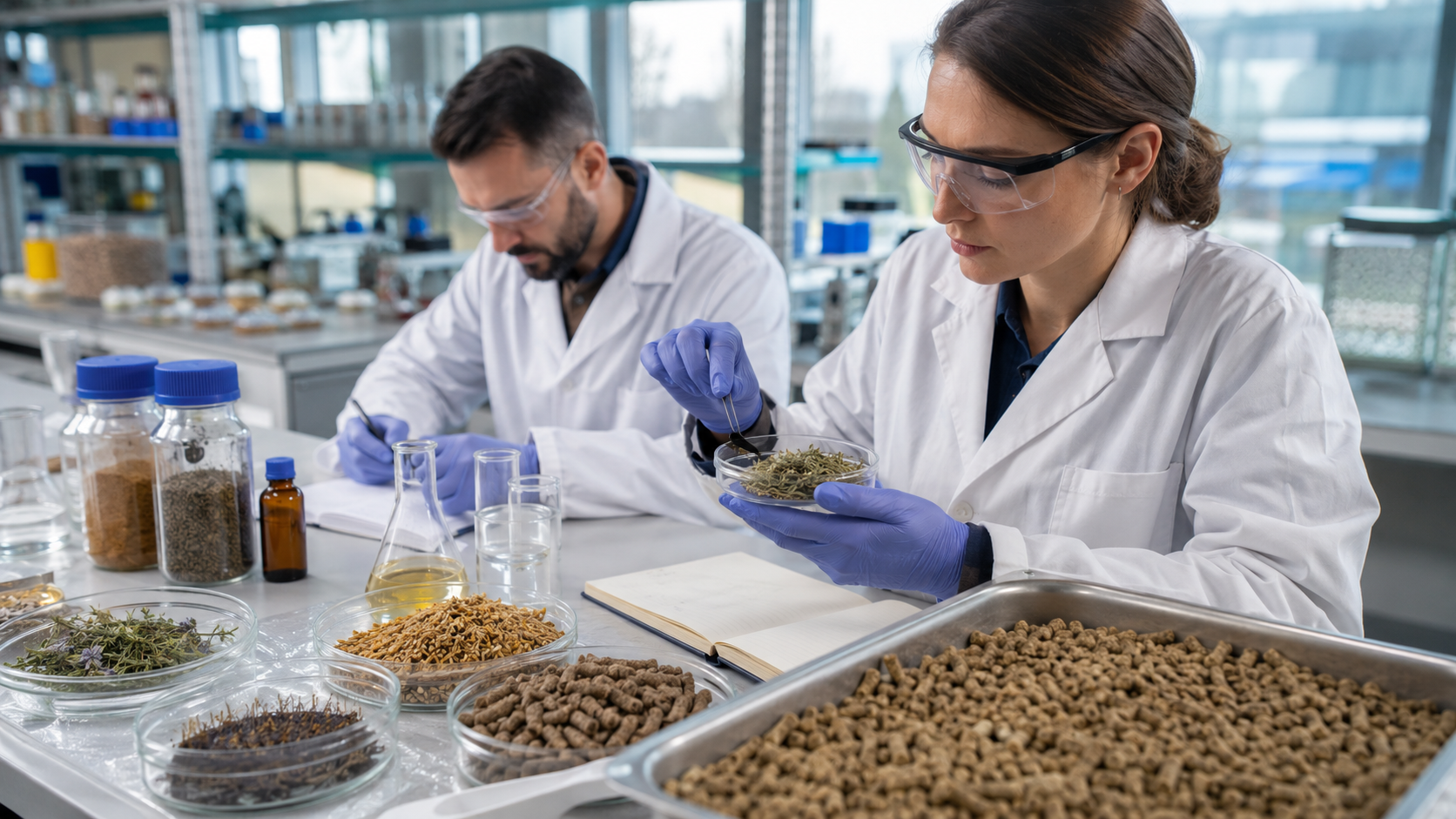
Essential oils and other plant-derived substances have attracted increasing interest across the feed industry as manufacturers explore a wider range of functional and sensory ingredients.
However, regulatory approval does not simply depend on whether an ingredient is natural. Safety assessment, product characterization, manufacturing consistency and correct application conditions remain important parts of the authorization process.
For feed companies serving multiple international markets, this means that technical documentation and regulatory awareness are becoming increasingly important alongside product development.
The latest authorization is another example of the EU maintaining detailed requirements for products used in animal nutrition.
Feed additive manufacturers looking to enter regulated markets need to consider not only product performance, but also raw material control, standardized production, laboratory testing and traceable technical documentation.
As feed formulation continues to evolve, companies able to combine product innovation with consistent quality management will be better positioned to respond to changing customer and regulatory requirements.
For the global animal nutrition industry, the direction is clear: new ingredients may create opportunities, but market access increasingly depends on reliable data, controlled manufacturing and compliance with local feed regulations.
Source: Commission Implementing Regulation (EU) 2026/1865, Official Journal of the European Union.
Contact: Highvarve Sales Team
Phone: 18660168226
Email: hhfeed@haihuabio.com
Add: Building 1, 10F, A4, Greenland Guojin Tiandi, Lixia District, Jinan, Shandong, China